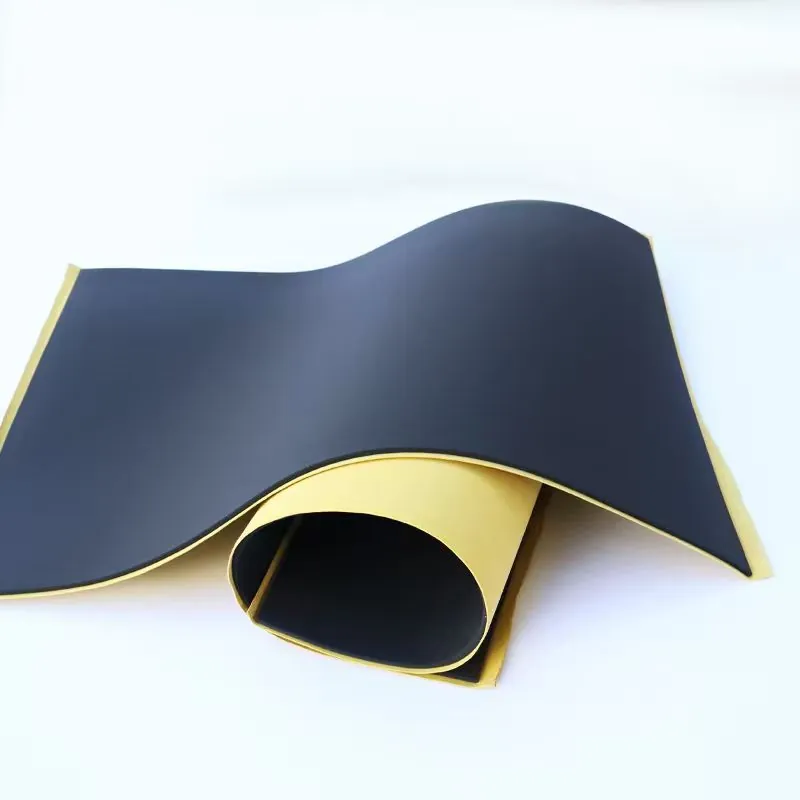
Laser Rubber vs Silicone: Two Materials Buyers Confuse
Buyers new to stamp production sometimes ask whether a silicone sheet can substitute for laser rubber — silicone is everywhere, it is rubbery, and it tolerates heat. Short answer from a factory that engraves dies daily: for laser-engraved stamp dies, use purpose-made laser rubber sheet. This comparison explains why, and where each material genuinely belongs.
What Each Material Is Made For
Laser rubber is a compound engineered for one job: to vaporize cleanly under a CO2 laser and leave a sharp, ink-holding relief surface. Everything about it — the polymer base, the fillers, the surface finish — is tuned for engraving quality and stamping performance. Silicone rubber is engineered for heat resistance, flexibility and release properties: baking molds, gaskets, sealing, casting. It is an excellent material in its lane — stamp dies are simply not that lane.
Head-to-Head for Stamp Die Work
| Property | Laser Rubber | Silicone Sheet |
|---|---|---|
| CO2 laser engraving | Clean vaporization, crisp shoulders | Poor edge definition, unsuited to fine die work |
| Fine text (6–8 pt) | Sharp and readable | Loses detail |
| Ink behavior | Formulated to accept and release stamp ink evenly | Not formulated for ink transfer |
| Impression quality | Consistent over thousands of impressions | Inconsistent — not a stamping material |
| Best use | Self-inking and hand stamp dies | Molds, gaskets, heat-resistant parts |
Why Engraving Chemistry Matters
A stamp die lives or dies on edge quality. When a CO2 laser hits laser rubber, the compound vaporizes in a controlled way, leaving near-vertical shoulders and smooth floor surfaces — that is what prints as a sharp impression. The engraving also has to survive washing and repeated inking without crumbling. Purpose-made sheets are tested for exactly this; we run the same material in our own stamp production, so our dies and the sheets we sell come off the same formulation.
Where Silicone Does Belong
To be fair to silicone: in mold-making, casting and high-temperature gasketing it is often the best material available. Some stamp-adjacent processes use silicone parts as press pads or mold forms. If your project is a mold rather than a laser-engraved die, silicone may be exactly right — it is just not a substitute for engraving rubber.
How to Choose with Confidence
For self-inking stamp dies the spec is simple: A4 laser rubber sheet, 2.3 mm thickness, CO2-optimized low-odor formula — full details on the product page, and our CO2 laser rubber buyer guide walks through the full quality checklist. If you are evaluating materials, request sample sheets: engrave fine text on your own machine, wash the die, and make test impressions. MOQ is 100 sheets with volume pricing, and questions about hardness are covered in our laser rubber hardness guide.